
On January 20, Atlanta City Council President Marci Collier Overstreet began her second council meeting as president by announcing changes to how the council would allow public comments.
She would begin enforcing city code Sec. 2-104 on public comments by giving each speaker two minutes of time, and speakers who received donated time will be placed at the end of the speaker’s list, Overstreet said.
But then she added another caveat that is not in city code: The person yielding time to another speaker would have to be in attendance in the council chamber for that time to be used.
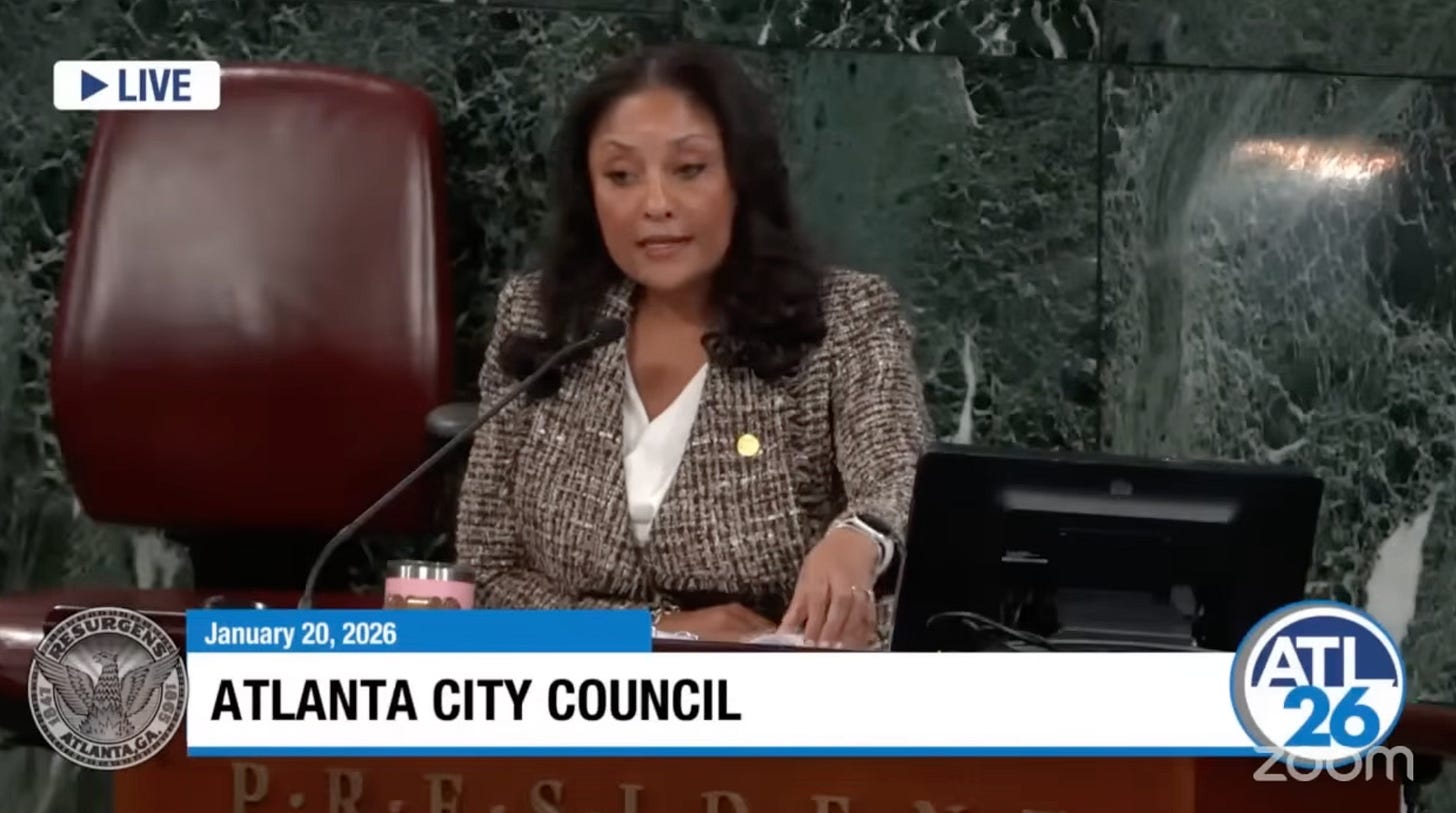
Generally, City of Atlanta public comment rules are more permissive than many neighboring jurisdictions, Overstreet said.
I first heard about the changes to Atlanta’s public comment process nearly four months after the January meeting, while attending a Coffee & Conversation event hosted by Ann Hill Bond featuring investigative journalist Nicole Carr. That discussion centered on healthcare inequalities, civic engagement, government accountability, and the ways residents access local decision-making. At the time, I didn’t know that a topic briefly mentioned during the conversation would send me down weeks of research, phone calls, and searching for media coverage.

I found no media coverage. A change announced from the city council podium that materially changed how constituents could publicly interact with their elected officials didn’t even warrant a sentence in a news story.
Two weeks into my search, Atlanta Civic Circle wrote about the changes to public comment—and the solutions proposed by Southern Center for Human Rights. The story also profiled a constituent who spent five hours at City Hall and paid $30 in parking fees to allow someone else to use his two minutes of public comment time.
Advocates for the proposed solutions have argued that the current two-minute speaking limit does not provide enough time to present an argument rooted in facts, research, and lived experience. For community members who spend months studying an issue or organizing around a neighborhood concern, two minutes can feel less like public participation and more like a countdown clock.
I later reviewed comments made by President Marci Collier Overstreet during the January 20 city council meeting. “This is not new. This is actually our code,” Overstreet told attendees before public comment began.
Subscribe
Those comments highlight an important tension in the debate. City leaders view the rules as longstanding procedures designed to maintain order and ensure meetings run efficiently. Critics, however, question whether some of those procedures create barriers for residents seeking to engage with their government.
One point that emerged during my review of Sec. 2-104 was the distinction between the ordinance itself and how public comment procedures are experienced in practice. The ordinance allows a speaker to yield time to another person who has signed up to speak and permits that speaker to be moved to the end of the comment list. It also caps yielded speaking time at ten minutes.
However, I could not find any language in Sec. 2-104 requiring the person who yielded their time to remain in the council chamber until the recipient speaks. Yet during the meeting, Overstreet stated that “the person yielding the time does have to be in attendance here in council chamber.”
Call to Action: Attend the next Atlanta City Council meeting and let us know whether you signed up for public comment and how it went.
When: Monday, June 15 1 p.m.
Where: Atlanta City Hall, 55 Trinity Ave. SW, Atlanta GA 30303
When Westside Voices reached out to the city clerk for clarification, the person who answered the phone conceded that requiring the person to stay in the meeting was not a part of the city code. But putting in that requirement was within Overstreet’s purview as City Council President, and she could set policy about public comment without it being in city code, we were told.
That distinction matters. Much of the debate surrounding public comment has centered not only on what the rules say, but also on how residents experience those rules when they come to City Hall to participate in the democratic process.
As debate over Atlanta’s public comment rules continues, I find myself returning to a simple question: “Who gets heard?”
Public comment is often one of the few opportunities residents have to speak directly to elected officials about issues affecting their neighborhoods, families, and quality of life. For community advocates, neighborhood leaders, and residents seeking answers from government officials, it can be one of the few chances to place concerns directly into the public record.
In that January 20 council meeting, Dr. Duwon Robinson urged Overstreet to reconsider her changes to public comment when he addressed the council. She replied that they could speak after the meeting.
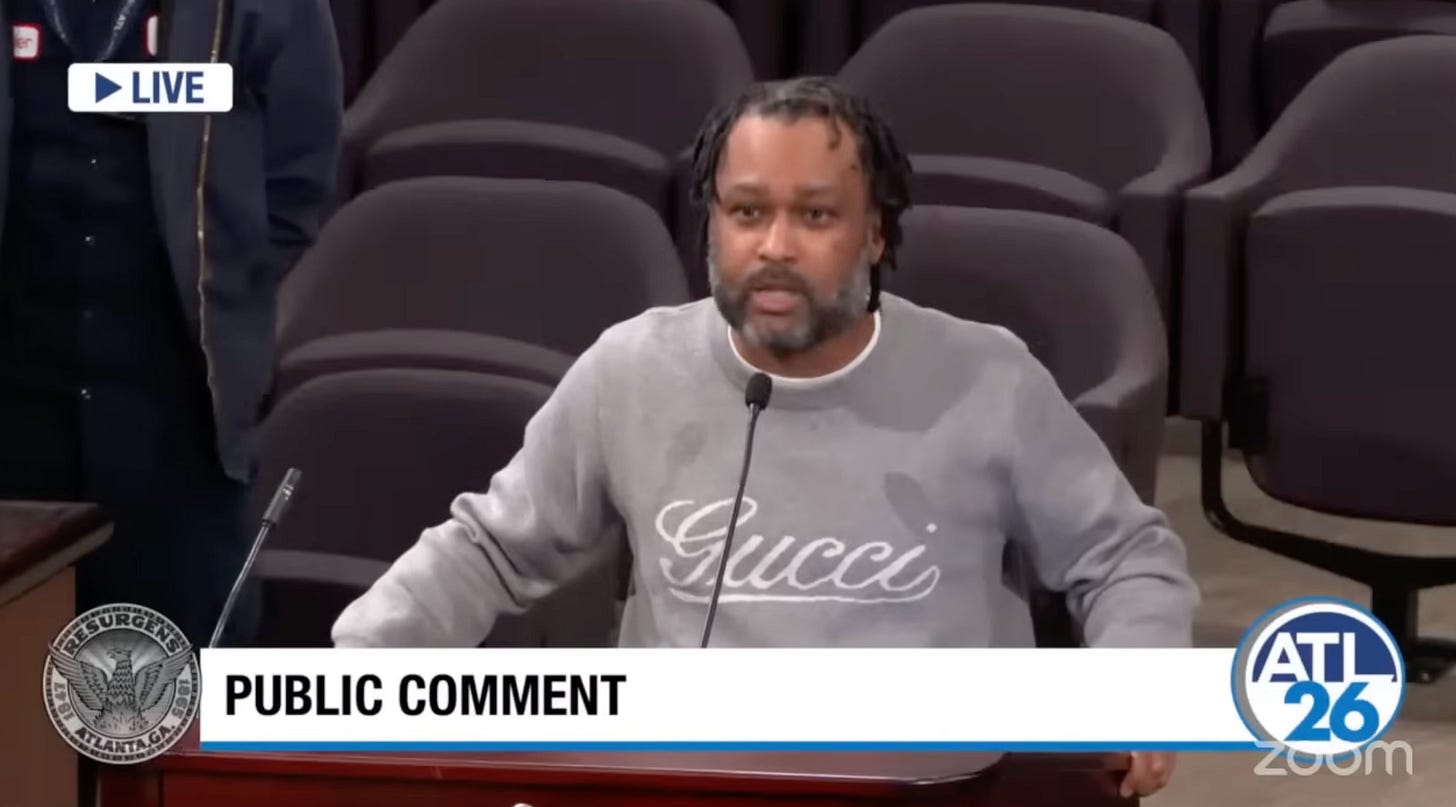
Recent discussions have focused on speaker sign-ups, time limits, and the practice of yielding speaking time. While some advocates initially feared the ability to transfer time was being eliminated altogether, the ordinance language appears to preserve that practice, albeit with restrictions. The larger concern raised by critics is whether procedural requirements and time constraints create barriers to meaningful participation.
Supporters may view the rules as a way to maintain order and ensure meetings run efficiently. Critics counter that efficiency should not come at the expense of public engagement, particularly when residents are speaking on issues that directly affect their communities.
The debate is ultimately about more than meeting rules.
It is about civic participation and public trust.
This is Westside Voices by Genia Billingsley.
Photos by Genia Billingsley
Edited by Mariann Martin