The first thing I noticed wasn’t the stadium.
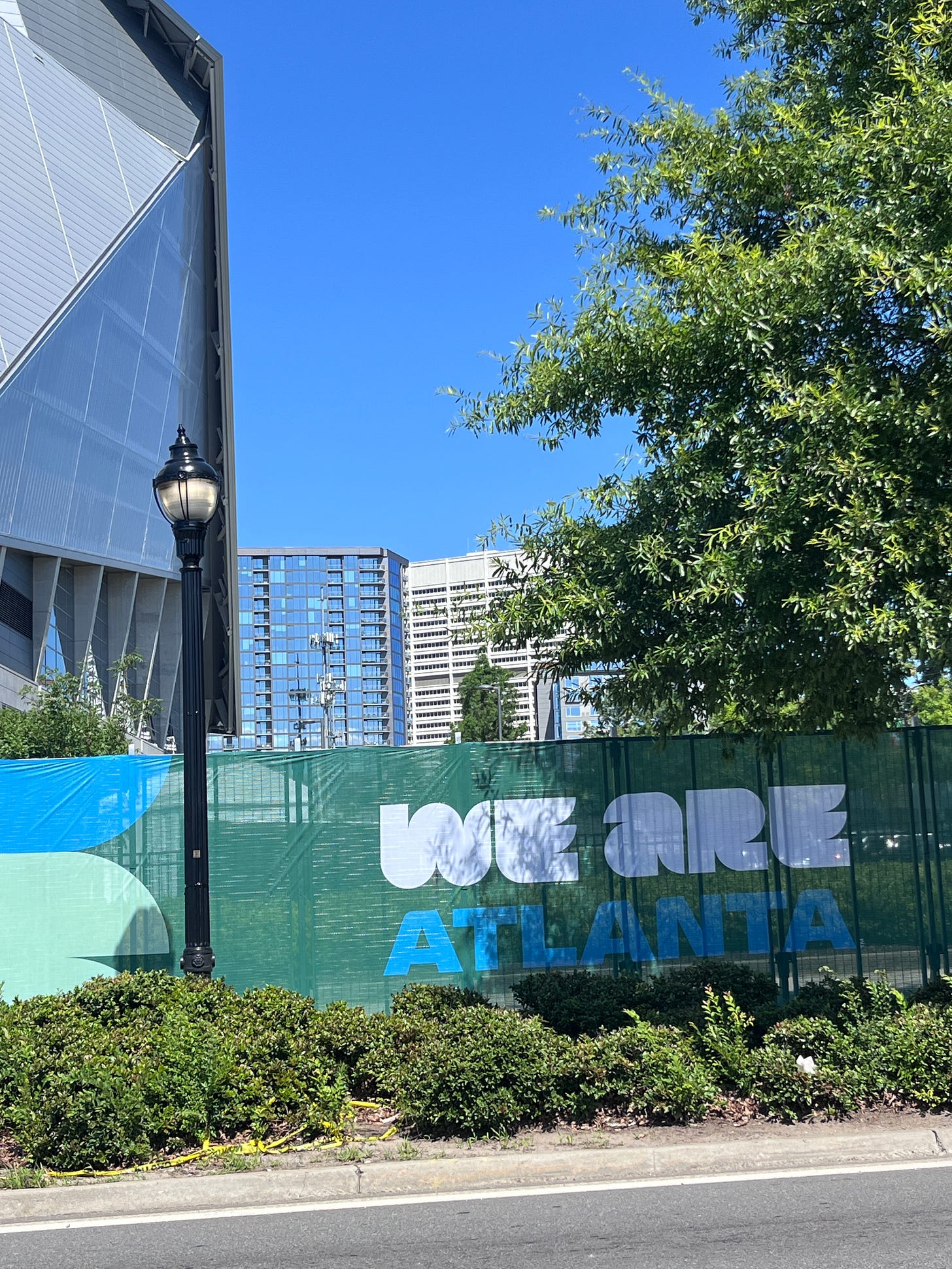
It was the fence. A simple mesh wire fence that stretched the entire property around Mercedes Benz Stadium.
Community members once used the steps in front of the stadium as a gathering place. People sat there to eat lunch, meet neighbors, or simply take a break during the day. Others used the stadium grounds and surrounding area as part of their daily exercise routines.
Not anymore.
Whether viewed as a necessary security measure or a symbol of exclusion, the fence has become a powerful metaphor for how some residents feel as Atlanta prepares to host one of the world’s largest sporting events.
“But every now and then, I wonder if the gate
was put up
to keep crime out or to keep our ass in?”
On Wednesday, a group gathered in Vine City for a community tour examining preparations for the 2026 FIFA World Cup, as residents pointed toward the barriers, security infrastructure, and newly improved streets surrounding Mercedes-Benz Stadium. What followed was less a discussion about soccer and more a conversation about promises.
Promises of investment.
Promises of opportunity.
Promises that many residents believe have yet to be fulfilled.
Subscribe
The question brought to mind a line from Goodie Mob’s 1995 track “Cell Therapy.” At the end of the second verse, it asks: “But every now and then, I wonder if the gate was put up to keep crime out or to keep our ass in?”
Three decades later, standing in Vine City and listening to residents discuss fences, security zones, and access surrounding one of the world’s biggest sporting events, the lyrics felt strikingly relevant.
The day of the tour was brutally hot. The Georgia sun beat down on us as we walked through streets lined with concrete, asphalt, and very little shade. At one point, I stepped away from the group and sat briefly on a set of concrete steps to rest. Within moments, a security officer approached and told me there was no lingering and that I needed to keep moving.
The interaction was brief, but it stayed with me.
Sitting there in the heat, I found myself thinking about his words. I wasn’t protesting. I wasn’t causing a disturbance. I was simply trying to escape the Georgia sun for a few minutes.
Perhaps that is why the moment felt symbolic.
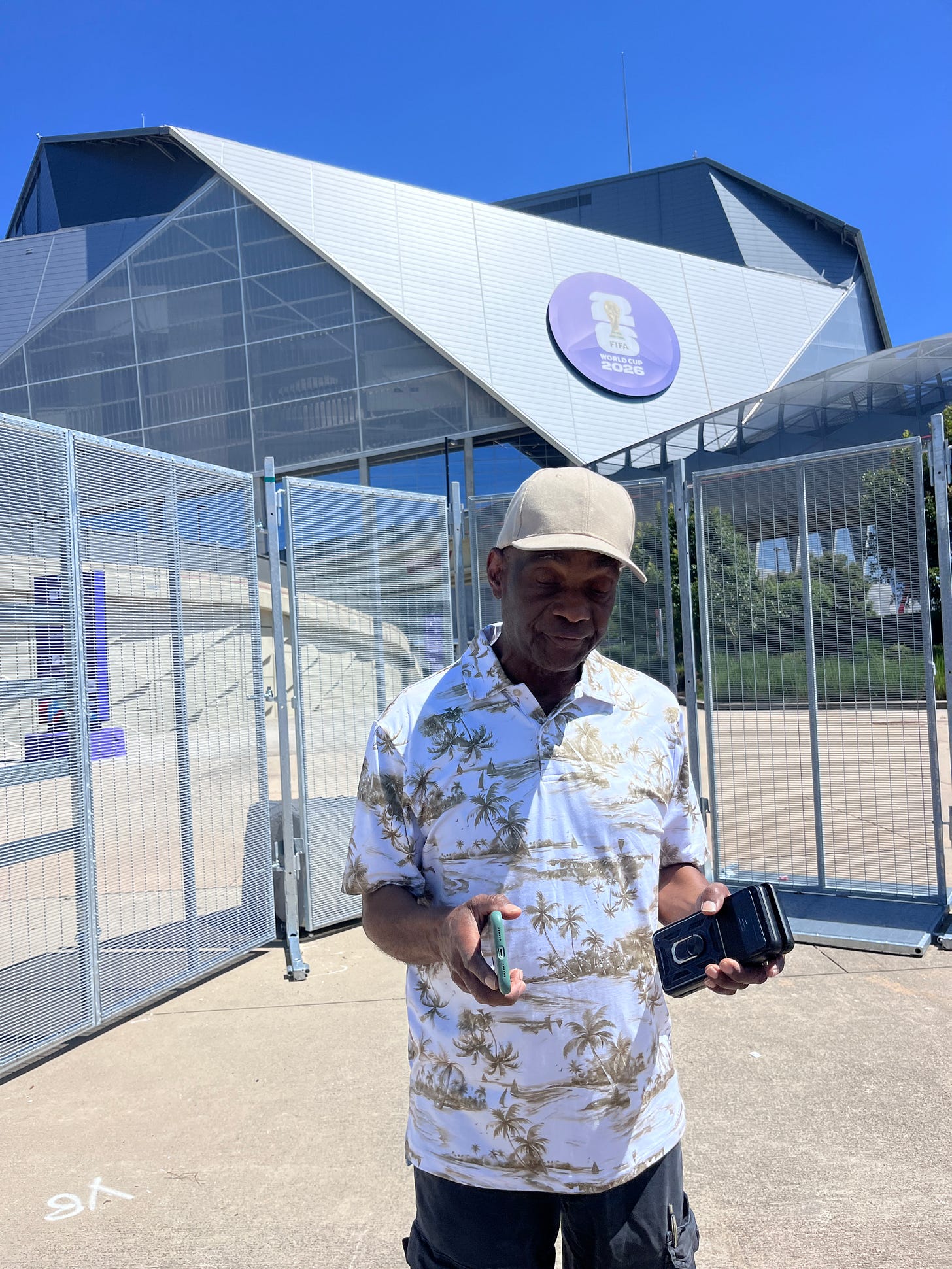
Residents weren’t just talking about fences, security zones, or vendor restrictions. They were talking about access. About how spaces that once felt connected to the neighborhood can begin to feel controlled by forces beyond it. About what happens when a community that has spent decades living beside a stadium starts to feel like a visitor in its own backyard.
At one stop, community leader Steven Muhammad gestured toward the fencing surrounding portions of the stadium district and offered an observation that lingered long after the tour ended.
“[The fence is] built to keep what’s going on at the World Cup in and Vine City out,” he said.
As we walked through the neighborhood, residents pointed out freshly paved streets and recent infrastructure improvements. While many welcomed the investment, others questioned why it took a global event to bring attention to needs they say have existed for years.
Call to Action: Attend the community press conference to learn more about the The Broken Promise Report.
When: Monday, June 8 11 a.m.
Where: Martin Luther King Jr. Drive SW and Northside Drive SW
Residents also expressed concerns about restrictions surrounding the World Cup Activation Zone and the impact those restrictions could have on local businesses and community traditions. Several participants discussed the annual Vine City Community Festival, a longtime neighborhood gathering traditionally held each June. According to residents, plans for the festival have been affected by World Cup-related restrictions that limit who can sell goods and services in areas surrounding the stadium.
For neighborhood leaders, the concern is not simply about one event. It is about whether the economic opportunities generated by the World Cup will reach the people who live closest to the stadium.
Those concerns are at the center of a report scheduled to be released next week by the Historic Vine City Civic Association.
Community leaders will hold a press conference on June 8 to release The Broken Promise Report, a document examining what residents describe as years of unfulfilled commitments made by city leaders, FIFA officials, and philanthropic organizations operating in Vine City.
According to organizers, the report highlights concerns about affordable housing, displacement, neighborhood investment, and barriers preventing local businesses from participating in World Cup-related economic opportunities. The report also examines the expiration of Atlanta’s Anti-Displacement Tax Fund and questions whether promised FIFA-related programming and benefits have reached the community.
Community leaders also point to the ATL26 Human Rights Action Plan, arguing that Vine City residents were largely absent from the planning process and that the final document lacks meaningful accountability measures.
The Historic Vine City Civic Association is calling on city leaders, FIFA officials, and philanthropic partners to address these concerns before Atlanta welcomes visitors from around the world.
Vine City has spent decades hosting Atlanta’s biggest events. Residents have watched stadiums rise, crowds gather, and investments flow into surrounding districts. What they are asking now is whether the community that has long served as a gateway to Atlanta’s biggest stages will finally share in the benefits.
The World Cup will last only a few weeks.
The legacy it leaves behind may last much longer.
Vine City residents want to ensure they are part of that legacy, not simply standing outside the fence watching it unfold.
This is Westside Voices by Genia Billingsley.
Additional reporting by Benjamin Trost
Photos by Carrie Freshour
Edited by Mariann Martin