A week before attending Fulton County’s town hall to discuss the Reparations Harm Report, I traveled to Wedowee, Alabama, for my aunt’s 75th birthday celebration.
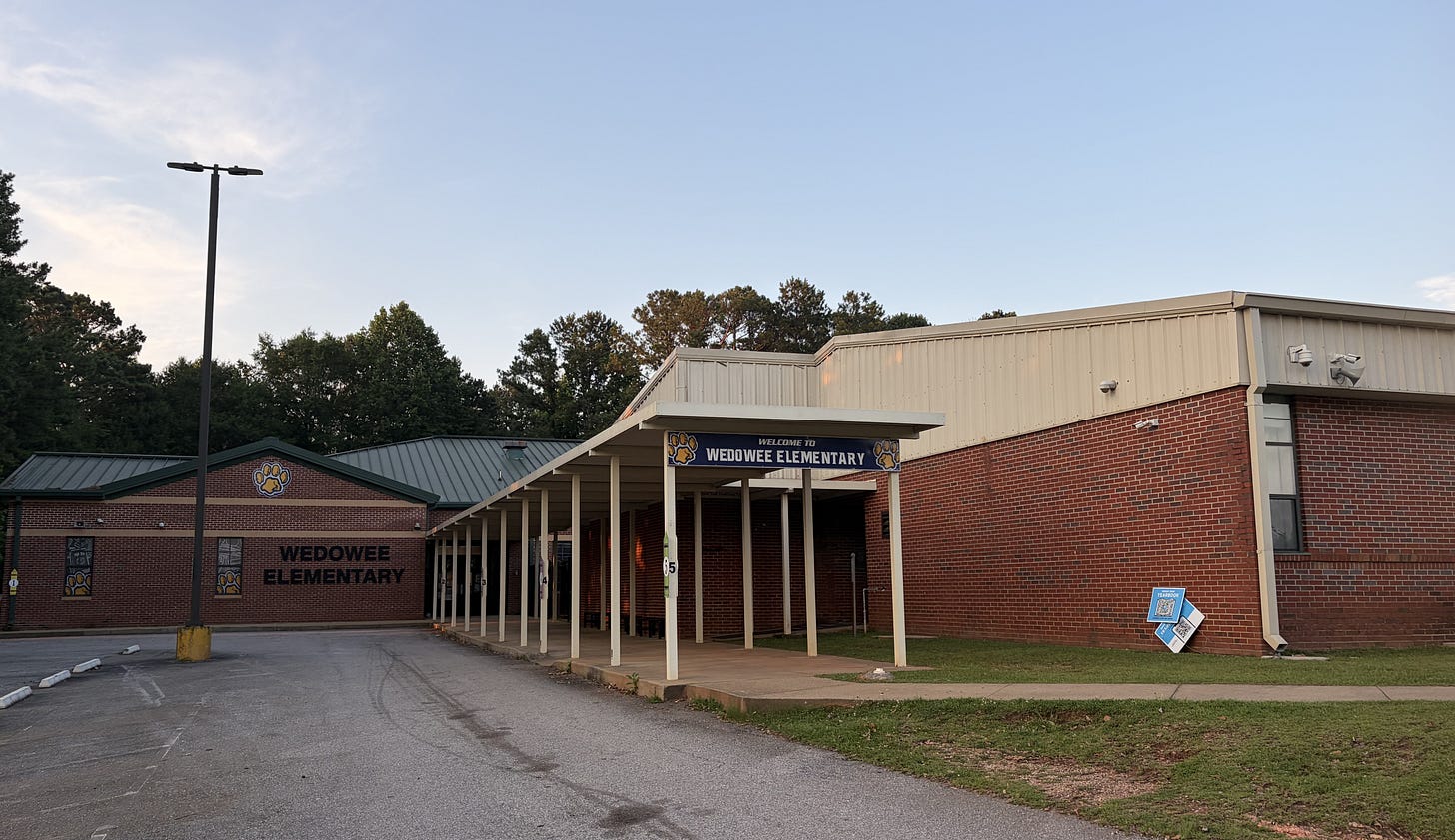
Like many family gatherings, the weekend became an opportunity to share stories. As relatives reflected on childhood memories and growing up in rural Alabama, I learned more about the school my aunt attended before integration. Her graduating class was the last to complete its education at the town’s segregated Black high school, a school that still stands at the end of the street where my grandmother once lived.
In a fitting twist, the building itself served as the venue for my aunt’s birthday celebration. Today, it operates as the town’s elementary and middle school, but for one afternoon, it became a place where family history, community history, and living memory came together under one roof.
The conversation stayed with me long after I returned to Atlanta.
We often frame history as something that happened a long time ago, tucked away in textbooks, archives, and documentaries. But sitting in that building and listening to family members share stories was a reminder that many of us still live with the consequences of a recent history, a history that society is often eager to bury. The people who experienced segregated schools, discriminatory policies, and unequal opportunities are not distant historical figures. They are our parents, aunts, uncles, neighbors, and community elders.
Call to Action: Talk to members of your family and find out what living history you can uncover. Document and share it.
That is one reason I was drawn to a recent town hall discussing Fulton County’s historic reparations report.
As conversations about reparations continue across the country, Fulton County is attempting something few local governments have done before: documenting the economic, political, and social harms inflicted on Black residents and exploring what repair might look like.
Subscribe
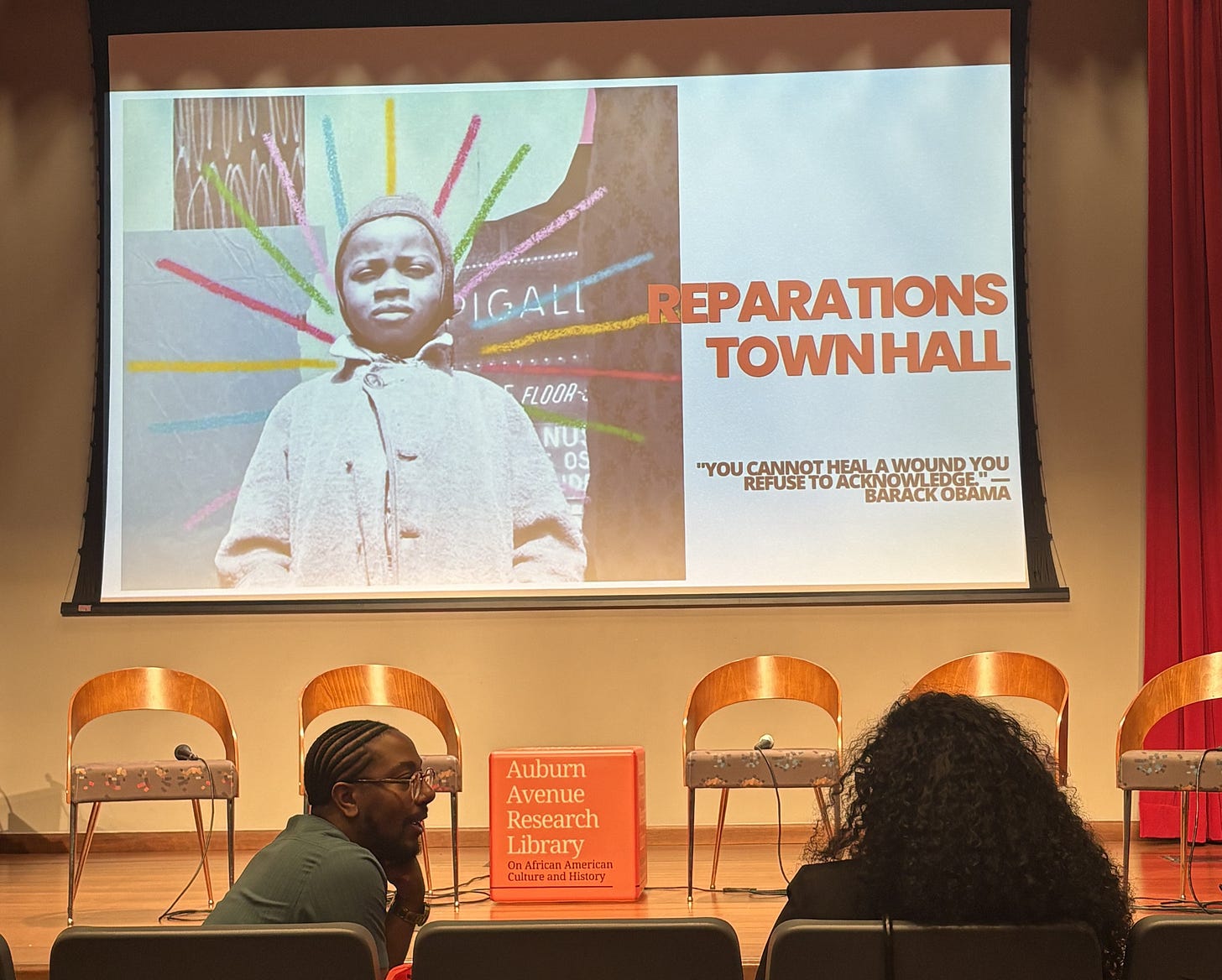
During the event, community leaders, historians, researchers, and elected officials gathered to discuss findings from the county’s reparations study, a document that traces the legacy of slavery, convict leasing, racial terror, voter suppression, discriminatory taxation, and unequal public policies through Fulton County’s history.
At the center of the conversation was Karshik Sims-Alvarado, chair of the Fulton County Reparations Task Force, who described the effort as the first county-led reparations study of its kind in the nation.
Throughout the evening, Sims-Alvarado emphasized that the work is not simply about assigning a dollar amount to historic injustice. Rather, she said, the report seeks to establish a factual record of harm and create a foundation for future repair.
That distinction surfaced repeatedly during the discussion.
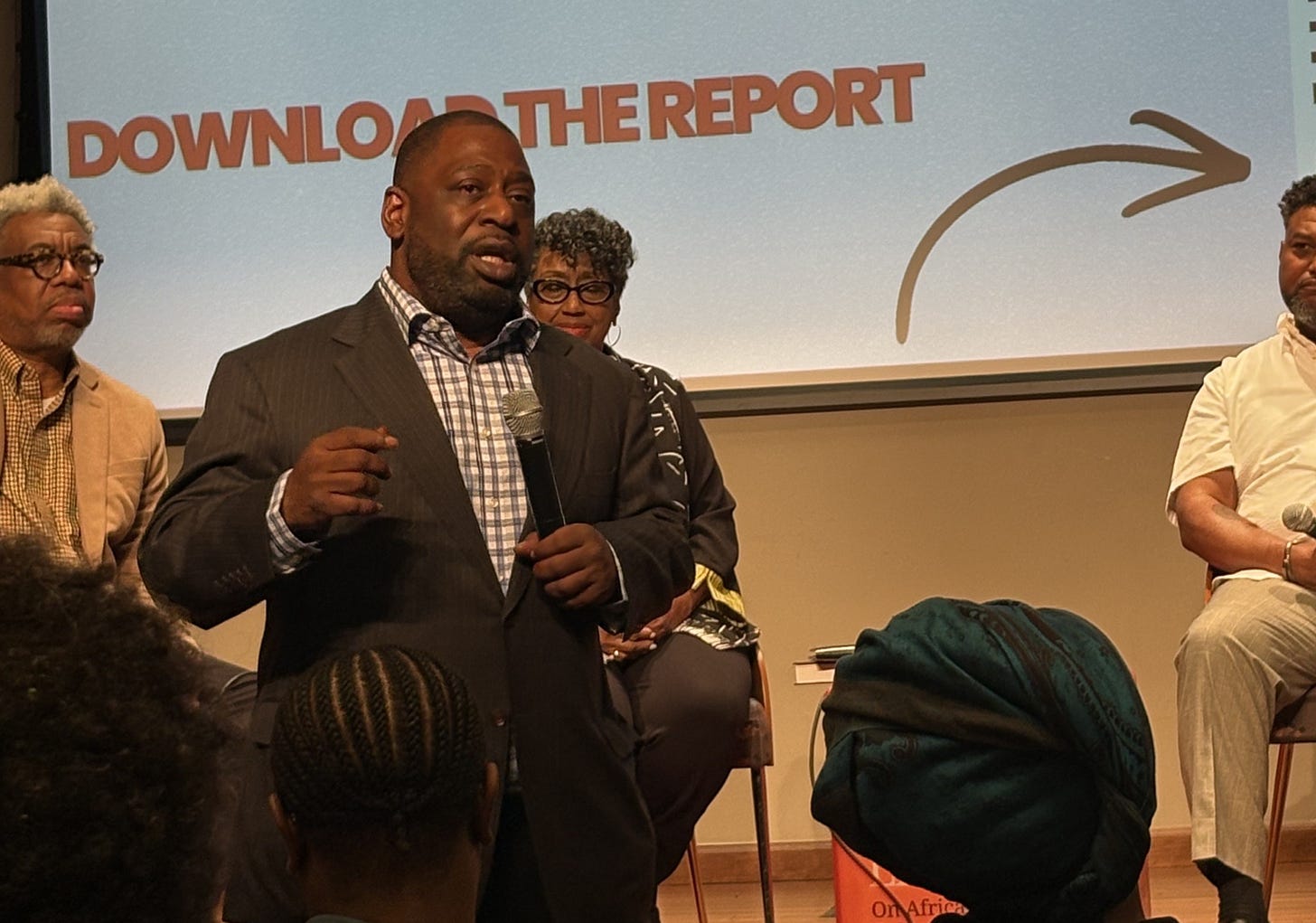
“There is no monetary value that could ever quantify the amount of trauma and pain that slaves went through during the transatlantic slave trade,” said Nathaniel Smith, the Founder and Chief Equity Officer of the Partnership for Southern Equity. “This is about healing for us, and through our healing, the healing of a nation.”
Panelists described reparations not simply as compensation, but as acknowledgment, accountability, and repair.
The report examines harms connected to slavery, convict labor, racial terror, disenfranchisement, segregated county services, and discriminatory property taxation. Researchers spent years reviewing county records to identify both public and private wealth extracted from Black residents through slavery and discriminatory policies.
The question before Fulton County is no longer whether harm occurred.
The question is whether acknowledging that harm will lead to action.
And whether a county willing to document its past is equally willing to invest in repair.
What stood out most during the discussion was not the staggering dollar figures— an estimated $1.78 billion in lost wages alone—attached to those harms. It was the repeated reminder that the racial wealth gap many residents see today did not emerge by accident.
Researchers connected slavery, convict leasing, lynchings, the Atlanta Race Massacre of 1906, discriminatory property taxes, redlining, highway construction, and unequal public investment to conditions that continue to shape communities today.
For those of us on Atlanta’s Westside, those connections feel familiar.
Many residents already know the story of the Chattahoochee Brick site, where Black men, women, and children were forced into labor through Georgia’s convict leasing system. Community advocates, descendants, and preservationists have spent years working to ensure that history is not forgotten.
During the town hall, researchers noted that convict labor helped produce bricks used in county buildings, streets, sewer systems, and public infrastructure throughout Fulton County. It was a sobering reminder that Atlanta’s growth was built, in part, through systems that criminalized Black life and transformed incarceration into a source of labor and profit.
The discussion also challenged a common perception about Atlanta.
The city is often celebrated as a center of Black political power and Black economic success. Yet panelists pointed to persistent disparities in wealth, education, housing, health outcomes, and criminal justice involvement that continue to affect many Black residents.
As Nancy Flake Johnson noted, generations of intentional policies created barriers that still shape opportunities today. The surprise, she suggested, is not that a wealth gap exists, but that so many Black families have persevered despite centuries of obstacles.
The conversation repeatedly returned to civic engagement.
Speakers encouraged residents to attend county commission meetings, study the report, ask candidates where they stand on reparations, and better understand the role local government plays in shaping everyday life.
The message was clear: documenting harm is only the beginning.
Fulton County has formally accepted the report. The next phase of the work will focus on what Sims-Alvarado called a “repair report,” a process intended to identify practical recommendations for addressing documented harms.
That process raises difficult questions.
What does repair look like?
Can local governments meaningfully address harms that span centuries?
Should repair take the form of direct payments, investments in housing, education, healthcare, economic development, land ownership, or some combination of all of them?
The answers remain uncertain.
Call to Action: Read the Reparations Harm Report, and share it with your community.
What is clear is that the conversation has moved beyond whether harm occurred. Researchers have spent years documenting it. County leaders have officially acknowledged it.
Now comes the harder work.
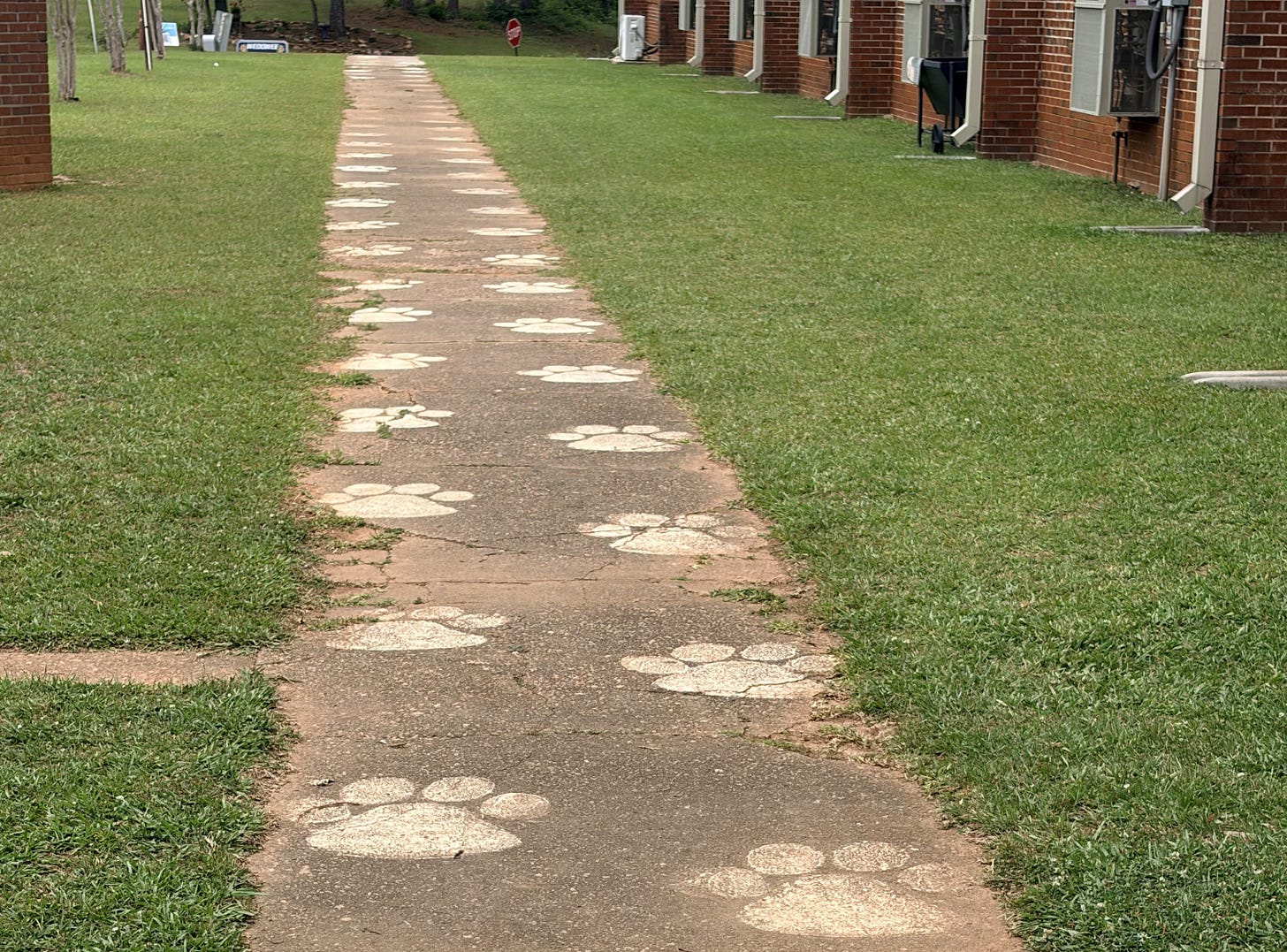
As I listened to the discussion, I found myself thinking back to that school building in Wedowee, Alabama.
A building that once educated Black students because segregation demanded it now serves a different purpose. Yet the stories connected to that place remain alive through the people who walked its halls. My aunt’s graduating class was not centuries ago. It was within living memory.
That may be one of the most important lessons from the town hall.
History is not as distant as we sometimes imagine. The people who experienced segregation, voter suppression, unequal schools, racial terror, and discriminatory policies are still among us. Their children and grandchildren continue to navigate the consequences.
The question before Fulton County is no longer whether harm occurred.
The question is whether acknowledging that harm will lead to action.
And whether a county willing to document its past is equally willing to invest in repair.
This is Westside Voices by Genia Billingsley.
Photos by Genia Billingsley and AJ Nichols
Edited by Mariann Martin