“If somebody shot someone here, everybody would cover it. But no one covers things like this.”
The comment from Nathaniel Smith of Partnership for Southern Equity landed with quiet force during the launch of a new community hydration station at Historic West Side Gardens on Atlanta’s Westside.
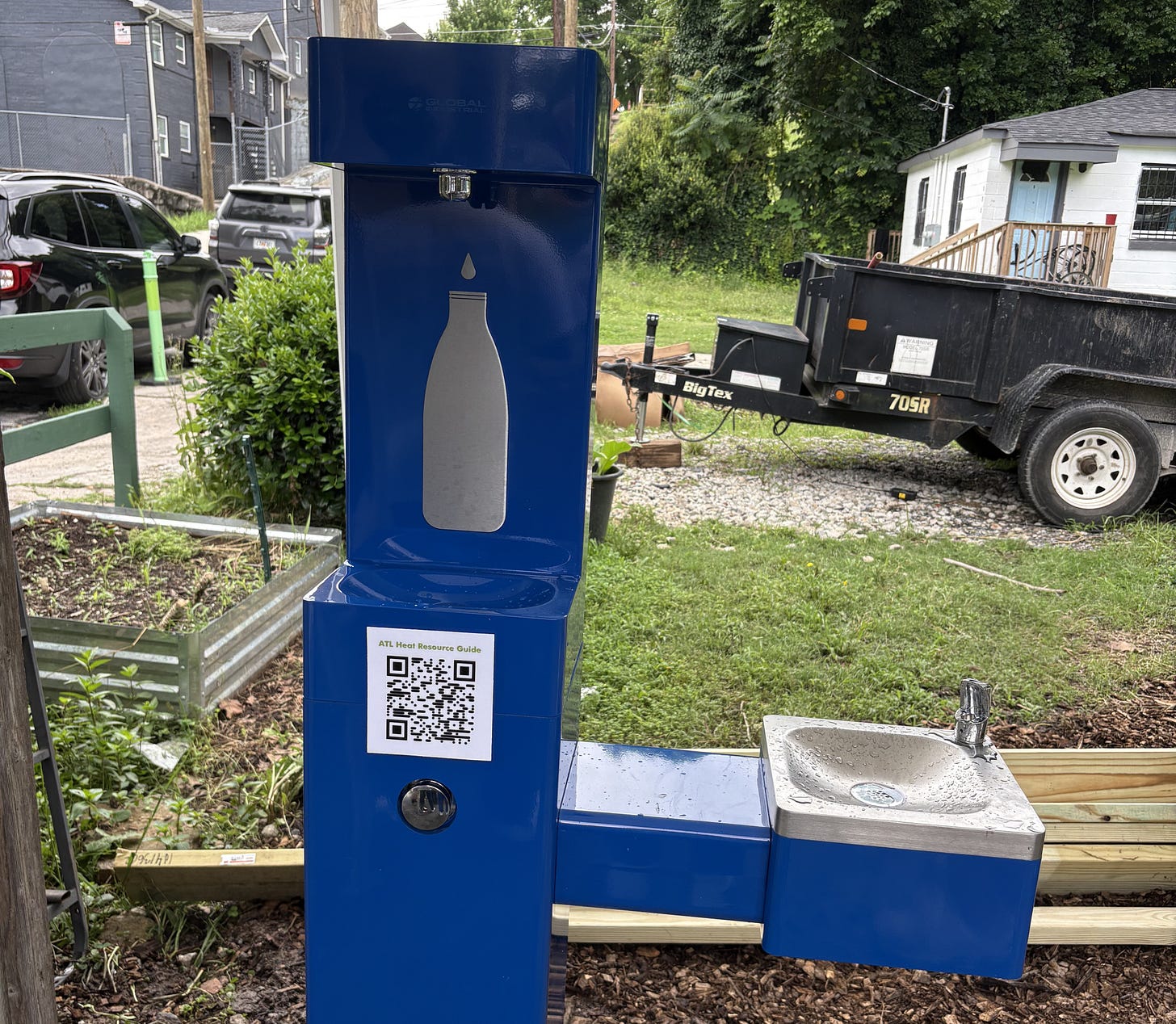
Around him, neighbors toured the garden, discussed the dangers of extreme heat, and celebrated the installation of a bright blue hydration station designed to provide free drinking water and connect residents to heat-related resources. It was the kind of event that rarely makes headlines, despite addressing a growing public health threat that experts say will only become more severe as temperatures continue to rise.
His observation captured a challenge familiar to many community journalists. Communities often receive attention when tragedy strikes. A shooting, a flood, a fire, or a crisis quickly draws cameras and reporters. The quieter work of preventing harm rarely receives the same coverage.
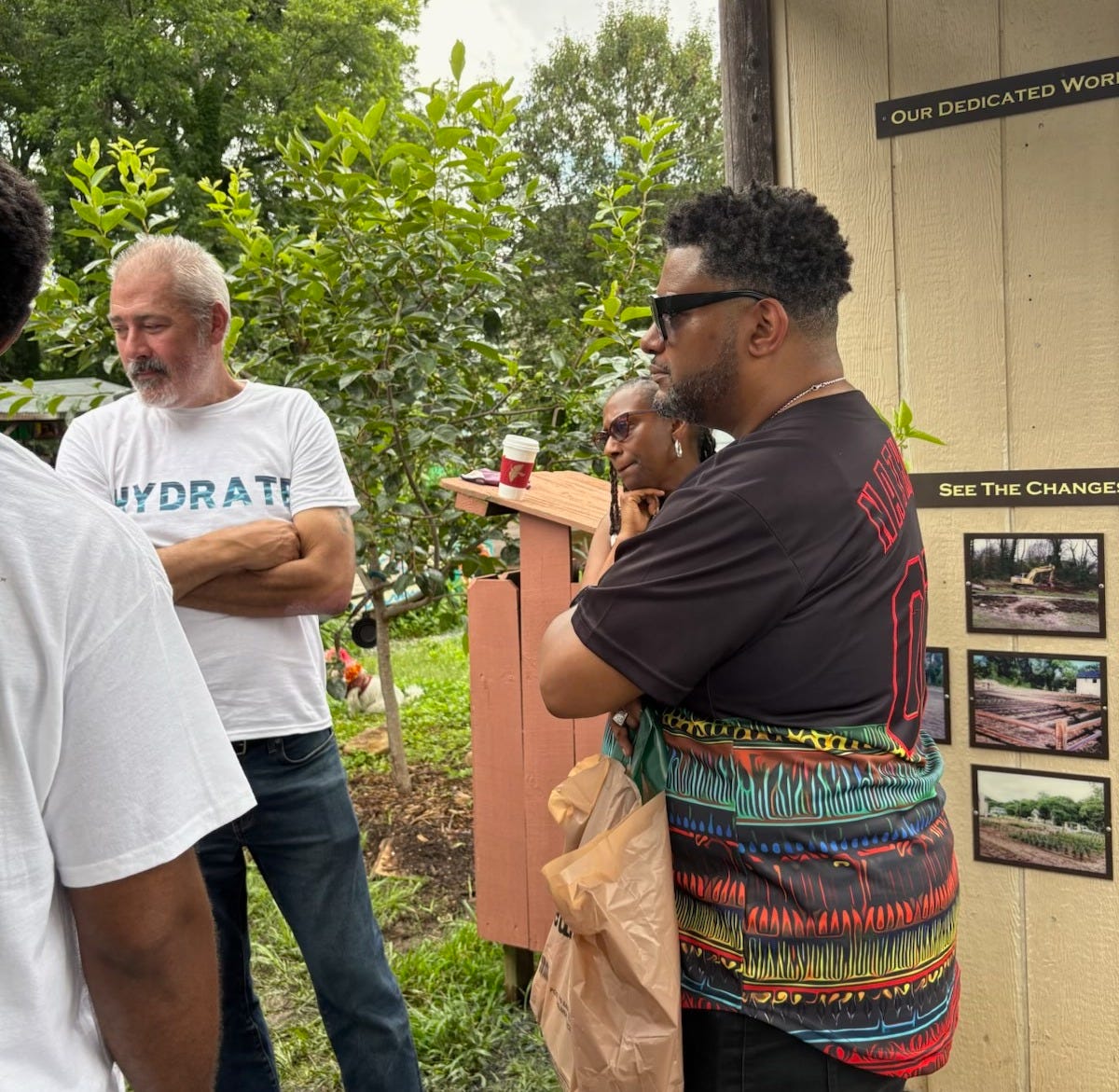
Yet on a recent Saturday morning, that prevention work was on full display.
While extreme weather often captures public attention through dramatic images of flooded highways, downed trees, and emergency responses, heat remains one of the deadliest weather-related hazards in the United States. Conversations about heat preparedness, however, frequently happen outside the spotlight.
That reality was evident during the ATL Hydrates Together initiative at Historic West Side Gardens.
The newly installed hydration station offers more than drinking water. Through an attached QR code, residents can access the ATL Heat Resource Guide, providing information about heat safety, cooling resources, and community support. Organizers hope the station will serve as both a practical resource and a visible reminder that extreme heat is a neighborhood issue requiring neighborhood solutions.
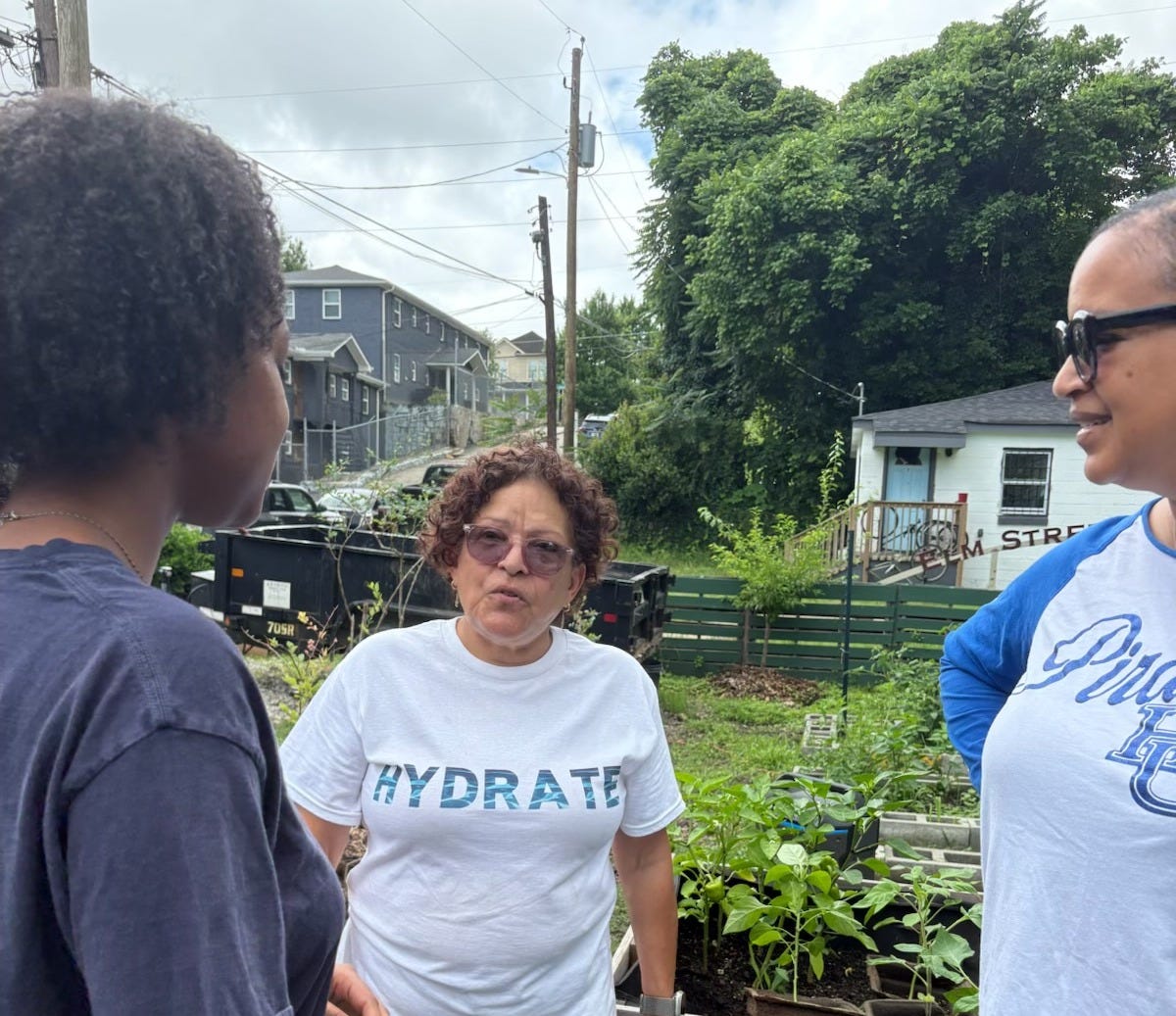
The event took place in a space already rooted in community resilience. Historic West Side Gardens has long served as a gathering place where residents grow food, share knowledge, and strengthen connections. Beyond the garden beds, the site is also home to a hyperlocal compost program that allows residents and businesses to exchange buckets of food scraps that are transformed into nutrient-rich compost. The finished compost is then used to support home gardens, community green spaces, and local food production, creating a neighborhood-scale system that reduces waste while strengthening food security.
During the event, the garden became a classroom for conversations about climate, health, and preparedness.
Participants discussed the disproportionate impact of heat on urban neighborhoods, particularly communities with limited tree canopy and fewer cooling resources. They also explored how trusted community spaces can help residents stay informed and connected during periods of extreme weather.
As Atlanta prepares for another summer of rising temperatures, the hydration station represents a small but meaningful investment in community well-being. It reflects a growing recognition that climate resilience is not only about large infrastructure projects, but also about ensuring residents have access to water, shade, healthy soil, fresh food, information, and one another.
In many ways, the hydration station and compost program tell the same story. Both are simple, community-driven solutions that address larger environmental challenges while improving daily life for residents. Neither is likely to generate major headlines. Yet both help neighborhoods become healthier, stronger, and better prepared for the future.
In recent weeks, public attention has focused on flooding, infrastructure failures, and environmental emergencies across the region. Those stories deserve coverage. But so do the solutions.
Community gardens, hydration stations, compost programs, resilience hubs, and neighborhood partnerships may not generate the same headlines as a disaster. Yet they often determine how well communities weather one when it comes.
Nathaniel Smith’s words lingered long after the event concluded.
If somebody had been harmed that morning, the story would likely have attracted far more attention. Instead, residents gathered to make sure fewer people are harmed in the future.
On a quiet Saturday morning in West Atlanta, that work was on full display.
And perhaps that is exactly why it deserves to be covered.
This is Westside Voices by Genia Billingsley.
Photos by Genia Billingsley
Edited by Mariann Martin