On May 20, I was in Riverdale doing one of my favorite tasks for Canopy Atlanta: community listening. Sitting with residents, hearing stories, and learning what people carry every day has become one of the most important parts of my work as a community journalist.
Then my phone rang.
Stay away from downtown Atlanta because the expressway was flooded, my sister frantically warned me. Traffic had stalled. Water had overtaken parts of I-285. People were stranded trying to navigate a city built for movement suddenly interrupted by water.
Subscribe
Immediately, I thought about When the Creeks Rise. I thought about Stop Flooding Us . I thought about the residents, environmental advocates, and community leaders who have spent years sounding the alarm about Atlanta’s development patterns, impermeable concrete surfaces, aging stormwater infrastructure, and the reality that much of the city was built over buried creeks and disrupted waterways.
For many Atlantans, the flooding on May 20 may have felt sudden. But for communities living near creeks, flood-prone intersections, and overwhelmed drainage systems, the warning signs have existed for years.
Water has memory.
Long before highways and parking decks, creeks carved pathways through these neighborhoods. Rainwater had places to spread, absorb, and move naturally through forests, wetlands, and soil. But as development accelerated, many of those natural systems were paved over, redirected underground, or confined to aging infrastructure never designed to handle the intensity of today’s storms.
And when the water has nowhere to go, it returns anyway.
The flooding that shut down parts of metro Atlanta was not just a traffic story. It was an infrastructure story. An environmental story. A climate story. And for many communities, an environmental justice story.
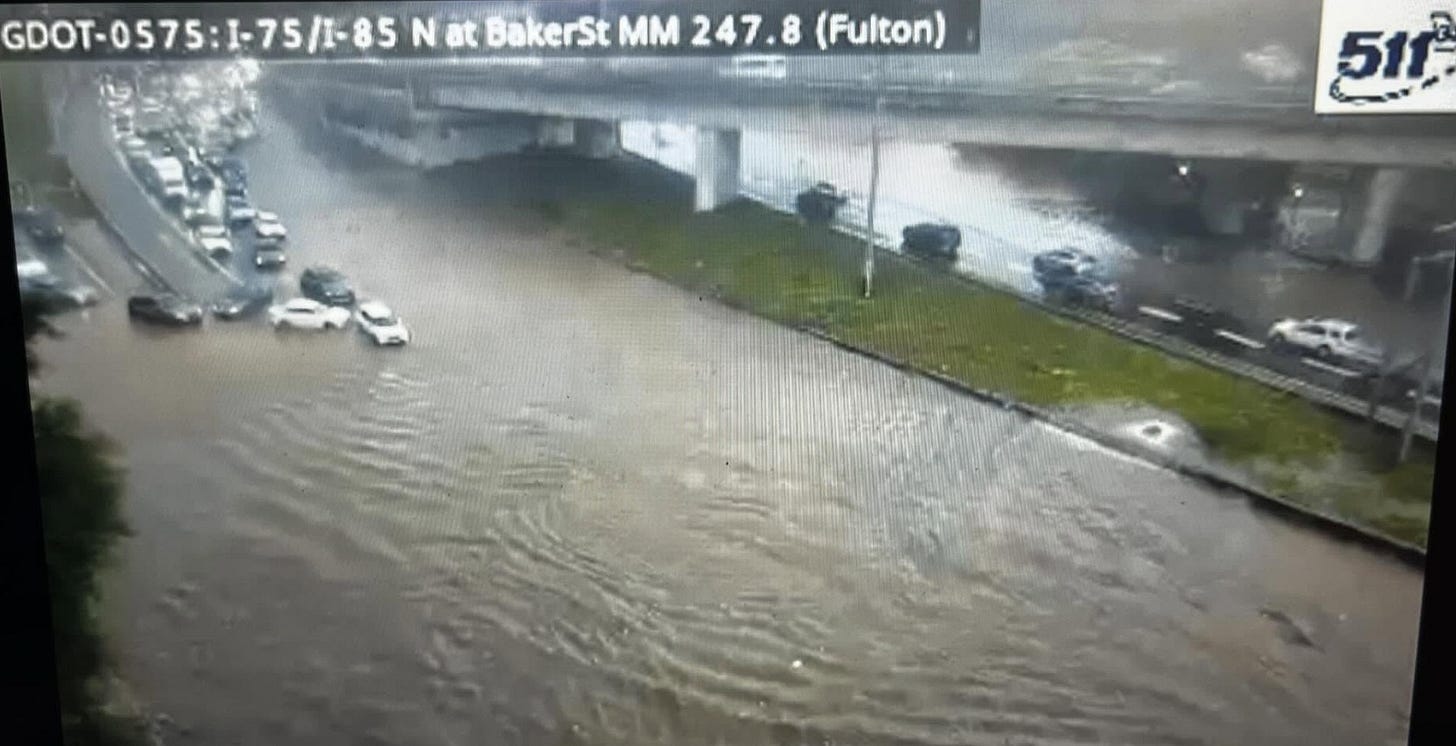 Image courtesy of Georgia Department of Transportation
Last week’s flooding also raises difficult questions about preparedness and investment. Atlanta remains one of the few major American cities without a dedicated stormwater utility fee system to fund large-scale drainage and watershed improvements. While many cities have established dedicated funding mechanisms to maintain and modernize stormwater infrastructure, Atlanta has continued debating how to pay for the growing costs of flooding, runoff, and climate resilience.
Meanwhile, development continues. Concrete expands. Rainfall intensifies. And aging systems strain under pressure.
Days after the downtown flooding, came reports of fish kills along the Chattahoochee River tied to polluted runoff, sewage overflows, and drought.
The same stormwater overwhelming roads and tunnels was also carrying pollution downstream into creeks and rivers already under stress.
Chattahoochee Riverkeeper executive director Jason Ulseth described it as one of the worst fish kills the organization has seen in decades, a sobering reminder that what happens on roads and parking lots does not stay there. It flows downstream into communities, creeks, and ecosystems already carrying the burden of aging infrastructure and rapid development.
There is something deeply symbolic about that connection.
As Atlanta prepares for the 2026 FIFA World Cup, as we block the street in order to paint new murals, and city leaders speak about welcoming the world, I cannot help but think about the systems beneath our feet. Beyond stadiums, entertainment districts, and development announcements are creeks, tunnels, pipes, and watersheds carrying the weight of a rapidly growing city.
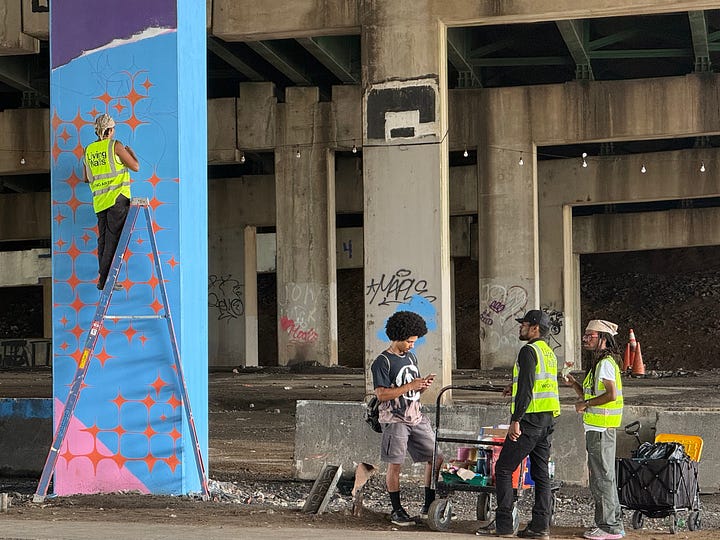
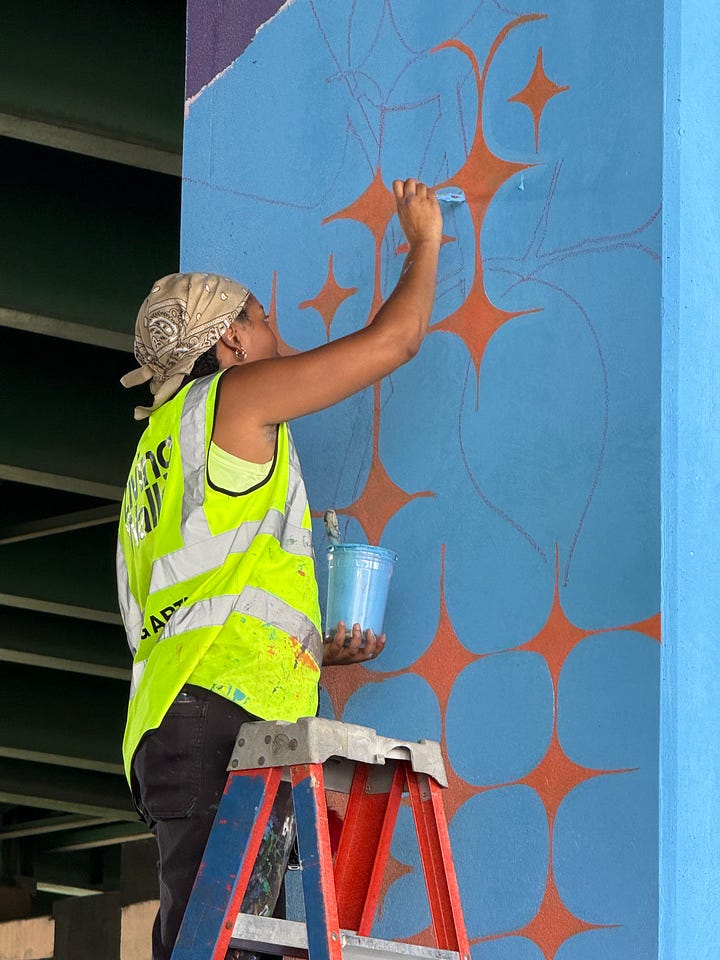
Communities across Atlanta are already asking whether we are truly prepared for what is coming. Not just the crowds but the pressure that growth places on infrastructure and the environment.
As we prepare to welcome the world, I find myself hoping the creeks don’t rise. I can’t help but think about the dead fish.
Then came the boil water advisory.
As residents were already trying to process flooded highways and images of dead fish floating along the river, many Atlantans also struggled to get timely information about whether their water was safe to use. Two days after the flooding, an electrical issue caused two pumps to fail at the Hemphill Water Treatment Plant, leaving one pump in operation. The city issued a boil water advisory, but it is unclear how many people saw it.
During an Atlanta City Council Utilities Committee meeting, officials acknowledged that NotifyATL, the city’s emergency alert system, only reaches a small percentage of residents.
Council member Liliana Bakhtiari asked a question that many residents were already asking themselves: “If we can bill people for their water, why can’t we notify them?”
That question stayed with me.
Because this moment was never just about one flooded highway or one advisory. It exposed how deeply connected our systems really are. Roads. Water. Sewers. Creeks. Communication. Development and Public trust.
Because water does not disappear simply because a city chooses to build over it.
Water always remembers.
This is Westside Voices by Genia Billingsley.
Photos by Mariann Martin
Edited by Mariann Martin